
AI and marketing technology multiply whatever process maturity already exists. With the right tools, a defined, agreed marketing process becomes faster and more effective; an undefined one becomes faster and more confusing. That is why the readiness question comes before the tooling question. Martech maturity measures how well your marketing technology supports the way that your marketing actually works: whether the tools are adopted, connected to each other and to sales, based on shared definitions, and used to make decisions. It is not measured by the number or cost of tools you own. In SM3, marketing technology is one of nine marketing categories, scored on the same five-level scale as the rest of the organization, so you can see whether technology is the constraint or whether something upstream is.
Why buying more tools does not raise maturity
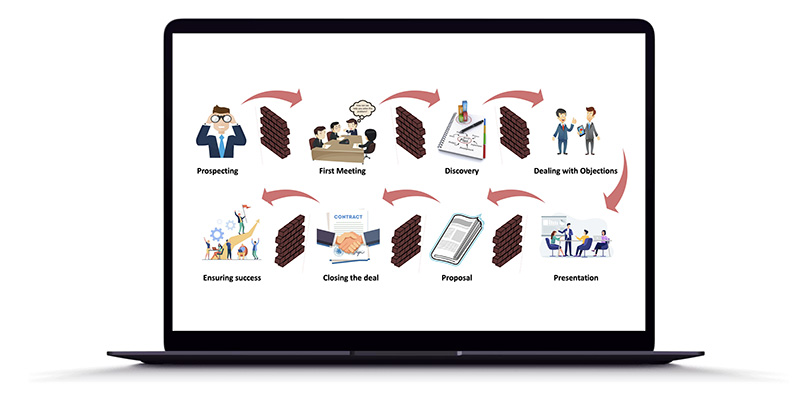
A marketing automation platform does not create a nurture strategy. It just runs whatever strategy you already have, faster. An analytics tool does not create insight. It reports on whatever you have defined as worth measuring. If segments are loosely defined, campaigns are planned separately from sales, or the two functions define a qualified lead differently, a new tool reproduces those gaps at scale.
Maturity increases when the marketing process is defined, agreed and followed. Technology then multiplies it. That is why SM3 scores marketing technology alongside strategy and plans, market segmentation and communications, rather than on its own.
Is my business ready for AI in sales and marketing?
Three questions give a good first indication.
Is the process defined? AI applied to a documented process can take on real work. AI applied to an undefined one tends to be adopted piecemeal, one person at a time, with results that are hard to repeat or measure.
Are the definitions shared? AI works from the data and rules it is given. If customer, prospect and qualified lead mean different things in different systems, the output inherits the inconsistency.
Are the systems connected? AI drawing on one tool sees only one part of the customer. Connected marketing and sales systems give it the whole picture.
SM3 assesses commercial automation as both traditional systems automation and AI, including agentic AI, because both describe how much of the commercial process runs on defined, connected systems. Sales process automation maturity covers the sales side in depth.
What to fix before adding AI to your sales and marketing
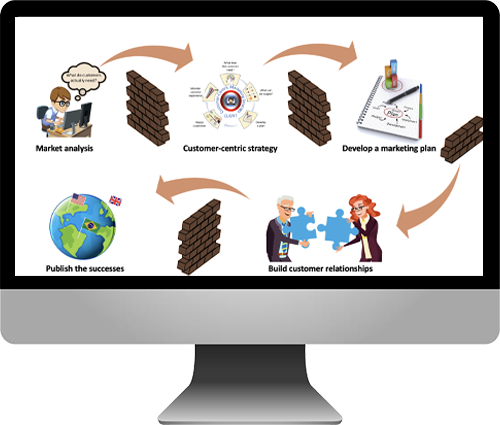
The order matters more than the tool. A practical sequence is: agree on the process, agree the definitions, check the quality of your data, connect the systems, train the people, then add AI where it removes work from a defined process. Skipping to the last step often leaves AI tools bought but used only lightly.

How can AI help in sales and marketing?
When the foundations are in place, AI can draft and personalize content, summarize customer conversations, score and route leads, surface patterns in pipeline data, and take on repetitive administrative tasks. Tools such as ChatGPT can help sales teams prepare for calls, draft follow-ups and research accounts, and help marketing teams draft and test messaging. The benefit depends on the process around the tool: generative AI improves sales and marketing performance most where a clear, agreed way of working supports it.
What martech maturity actually covers
Five questions support any serious assessment of marketing technology.
Adoption. Are the tools you pay for used fully, by the people meant to use them?
Integration. Do the marketing tools connect to each other and to the CRM, or does each hold a partial/conflicting picture of the customer?
Data. Do marketing and sales use the same definitions for customer, prospect, qualified lead and revenue, so that figures in different systems can be reconciled? The SM3 glossary explains why central data definitions matter.
Skills. Have your people been trained to use the tools properly? A simple system used fully usually outperforms a sophisticated one used only partially.
Measurement. Can the stack show which activity produced revenue, or only which activity produced engagement?
Where martech usually breaks down
Tools bought to solve single problems. Each purchase made sense at the time. Together, they overlap, leave gaps, and don’t share data.
The connection with sales. Marketing’s platform scores and routes leads; the CRM records what sales does with them. If the two do not connect, each function reports its own version. Sales and marketing alignment covers the wider picture.
Ownership. Nobody is responsible for the stack as a whole, so each tool is owned by whoever bought it or possibly by nobody.
Reporting rather than deciding. Dashboards describe what happened. A mature stack also informs us what to do next.
The five levels applied to marketing technology
The level definitions below are the SM3 levels. The martech examples are illustrative, to show what each level tends to look like, and are not the scoring criteria.

Basic. Low maturity; the system may function but lacks sophistication. Illustrative example: email and social tools used separately, with results tracked by hand.

Reactive. Self-supporting units that react to some extent but sit behind the curve; automation is outdated, and spreadsheets are abundant. Illustrative example: several tools bought for specific problems, none connected to the CRM.

Conforming. An average, reasonably well-run organisation, though sales and marketing may still operate largely separately. Illustrative example: a marketing platform that works well within marketing, with reporting that stops at marketing’s own metrics.

Optimizing. Effective and efficient, coordinates across functions, makes real use of automation and AI, and meets targets consistently. Illustrative example: marketing activity traceable from source through to revenue, and AI applied to defined processes.

Mastery. Excellence throughout, agile in a changing world, an example to others. Illustrative example: technology choices driven by strategy, with the stack adapting quickly as the market changes.
A quick self-check
- Could you list every marketing tool you pay for, and who owns each one?
- Is anyone keeping a spreadsheet that duplicates something a tool already holds?
- Do marketing and sales count leads the same way?
- Can you trace this quarter’s revenue back to the marketing activity that started it?
- Has everyone using the main platforms been trained on them?
- Where AI is used, is it applied to an agreed process?
These questions can highlight areas worth reviewing. They are not a scoring method. The SM3 assessment provides the structured scoring needed to establish your maturity level.

Martech in a marketing capability framework
Marketing technology is one capability among several. The SM3 marketing categories cover strategy and plans, branding, market awareness, market segmentation, communications, competitive analysis, marketing technology, staff selection and development, and product & offer management . Scoring them together shows whether technology is the real constraint, or whether strategy or segmentation is limiting what the tools can do. The effectiveness framework sets out the full model.
How SM3 measures it
A group of people from sales and marketing answers the same questionnaire independently and confidentially, in 20 to 30 minutes each. Marketing technology is scored on a five-level scale and compared with average performance and best practice. Because salespeople answer too, consistency indicators show whether the two functions see the stack the same way, which can reveal that the people who chose the tools and the people who use them experience them differently.

Common questions

A structured measure of how well marketing technology is adopted, integrated, supported by shared data and used to make decisions, placed on a defined maturity scale.
Not on its own. Maturity rises when the marketing process behind the tools is defined and followed; the technology then multiplies it.
It can help with call preparation, account research, follow-ups, and drafting, which frees time for selling. The biggest gains come when the sales process is defined, so the tool supports an agreed way of working rather than replacing it.
Start with a defined task in a defined process, such as drafting follow-up emails or summarizing call notes, agree how the output is checked, and measure the time saved before expanding.
A structured set of the capabilities a marketing function needs, each assessed against defined levels. SM3 uses nine marketing categories, scored on the same scale as sales.