


How can it improve your commercial effectiveness?
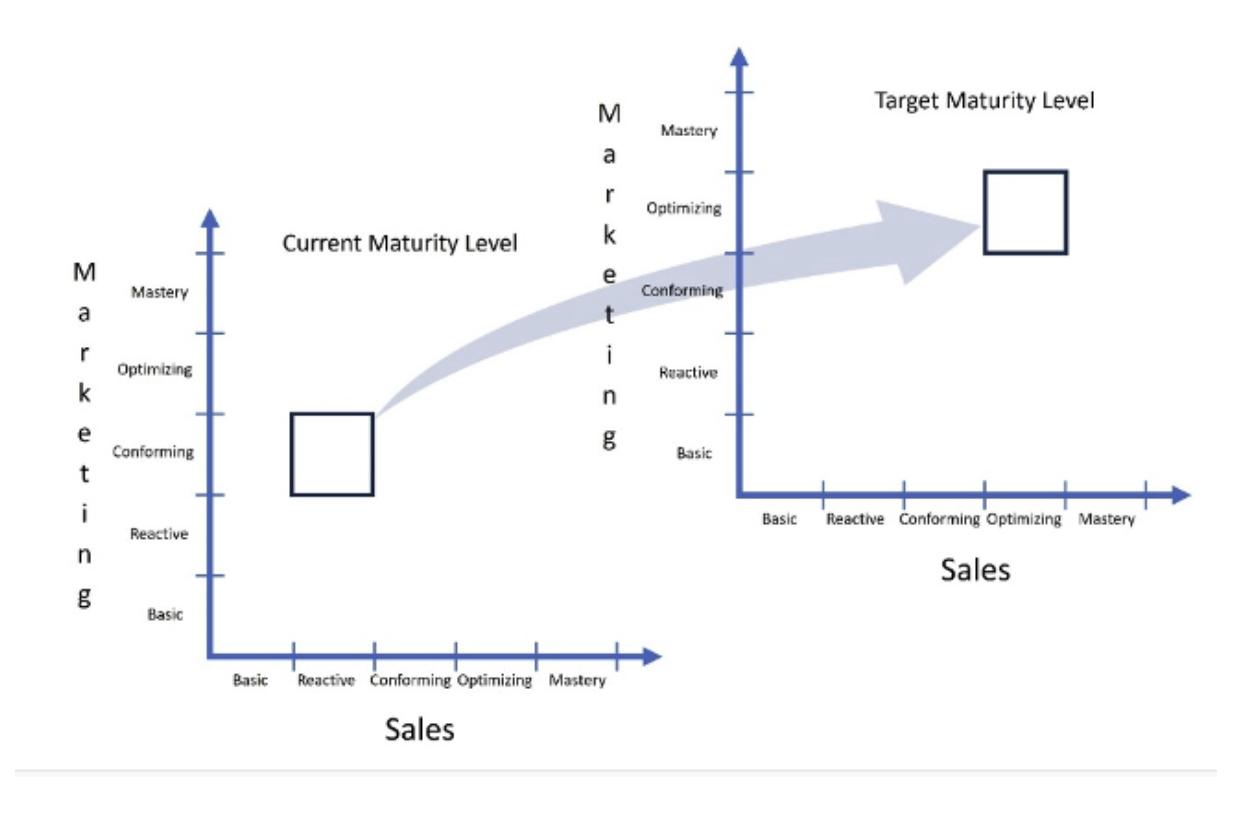 A Maturity Model is a methodology used to improve organizational capability.
The purpose of a maturity model is, in the first place, to define various levels of maturity across multiple topics. Starting with a basic level where the organization in question functions, but in a generally unstructured way and then moving through various (defined) stages to a fully mature organization. One that is often used as an example, within their own industry or geography, of how things should be done.
Maturity models were originally used in the software development industry to increase productivity and reduce programming errors through better communication, reuse of existing programs and the development of “Best Practices”. In practice, this turned out to be so successful that it led to a change in the way that organizations behaved, with more emphasis on the importance of activities that were repeatable, measurable, and continuously improved.
The problem with most maturity models is that they are one dimensional; typically, they look at an organizational capability like “Business Intelligence”, which is in itself a very complex subject, but they fail to consider, for example, “Data Integration” capabilities, which are allied but totally different. From an organizational point of view “Business Intelligence” can only be effective if the data integration issues have been solved. Data Integration (which is very costly to get right), is only of use to the organization if you use it for something which will give a return on investment – which is Business Intelligence.
The same is so true of Sales and Marketing.
The only way to create a truly effective commercial organization is to develop both world-class sales and world-class marketing AND ensure that they work together instead of working in isolation. Otherwise you can create a situation where deals are lost, and targets are not met.
Based on this success, other industries/sectors/disciplines have increasingly looked to Maturity Models to assess their current performance. This provides a roadmap to a future where costs are lower, effectiveness is higher, and most importantly, customer satisfaction and thus customer retention is higher. Both customers and suppliers become involved in processes that were initially only discussed within the organization itself.
Perhaps somewhat surprisingly, the objectives of these models are very similar across different industries. While the criteria may differ per process type, industry, or department, the general assumption remains that organizational change and evolution occur in predictable patterns. These are structured into different levels that depict the typical evolution of measured objectives, which are assessed against criteria over time.
The Sales and Marketing Maturity Matrix serves to help YOUR organization perform better in both sales and marketing and to improve their joint efforts…
#maturity matrix, #sales and marketing maturity matrix, #sales improvement, #marketing improvement, #business growth, #sales, #marketing